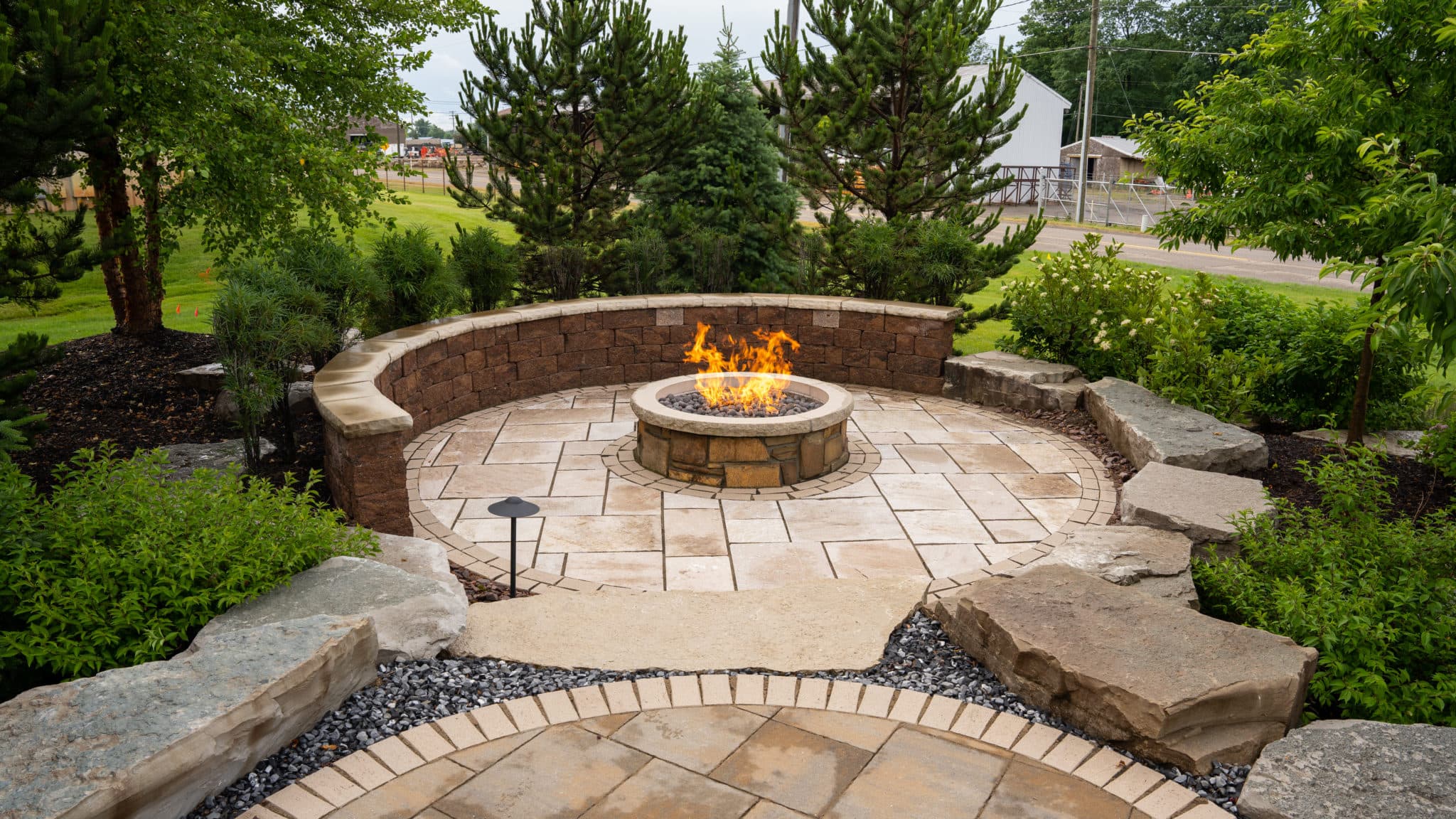
A soggy backyard is one of the most common Asheville landscape complaints we hear — usually after a homeowner has already tried the easy fixes (aerating the lawn, moving the sprinkler heads, adding a downspout extension) and nothing worked.
The reason those don't work is that most persistent yard-drainage problems have structural causes: the grade of the yard, the water table underneath, or the way roof runoff is being directed. Fixing them takes actual civil work, not a lawn tune-up.
Here are the four proven drainage fixes we install on Asheville, Fairview, Fletcher, and Weaverville properties, and how to figure out which one your yard actually needs.
Step 1: Diagnose before you dig
Watch the yard during and after a heavy rain. Where does water pool? How long does it take to drain? Where's it coming from — sheet flow off the lawn, a downspout, or seeping up from below? Different symptoms point to different solutions.
The U.S. Environmental Protection Agency publishes a residential stormwater diagnostic guide through its Soak Up The Rain program — a good starting point for figuring out whether you have a sheet-flow, downspout, or groundwater problem.
The USDA Natural Resources Conservation Service also publishes soil classification maps by county — clay-heavy soils drain slowly no matter what you do, sandy loams drain fast, and the fix depends on which you have.
Fix 1: Regrade the yard (best for sheet-flow problems)
If water is running across the yard toward the house instead of away from it, you don't have a drain problem — you have a grade problem. The fix is to reshape the soil so the natural slope carries water where you want it.
Industry standard: the ground should drop at least 6 inches over the first 10 feet away from any structure or hardscape. The National Association of Home Builders uses this as its recommended minimum for new-construction lot grading, and the International Code Council codifies it in the International Residential Code (IRC R401.3).
Regrading is invasive but permanent. Once the slope is right, you rarely have to touch it again.
Fix 2: French drain (best for wet spots and springs)
A French drain is a perforated pipe buried in a gravel-lined trench, sloped to daylight or a dry well. It intercepts subsurface water and routes it away. Best use case: a persistent wet spot in the middle of the yard, or a slope where groundwater seeps out during rainy periods.
Key spec: 1-2% grade minimum along the pipe. Anything flatter and the water sits in the pipe instead of moving. Trench depth typically 18-24 inches; wider (12+ inch) trenches drain more water than narrow ones.
Fix 3: Swale (best for large flow across long distances)
A swale is a shallow, wide, planted depression that carries water across the yard by surface flow. Cheaper than a French drain, easier to maintain, and doubles as a design feature. Best use case: large lots where you need to move water 50+ feet, or properties on hillside grade.
The American Society of Landscape Architects publishes residential stormwater design standards that include swale sizing, slope, and native-plant selection — a good reference for anyone designing one from scratch.
Note: where a swale crosses a driveway or walkway, you'll need a channel drain to keep the flow moving under the hardscape. On concrete drives, this is where drainage design and slab work have to be integrated — channel drain placement, cross-slope, and grade transitions all matter, and getting them wrong causes standing water at the intersection.
Fix 4: Dry well (best for downspout discharge)
A dry well is a buried, gravel-filled pit (or a manufactured chamber) that collects concentrated water — usually from a downspout — and lets it slowly percolate into the surrounding soil. Best use case: your downspouts dump directly next to the foundation, and you can't just extend them to daylight because there's no obvious low point.
Sizing matters: the dry well needs to hold the runoff from a typical rain event long enough to soak in. In Asheville, Fairview, Fletcher, and Weaverville, we usually design for a 1-inch rain event on the tributary roof area, then check the local percolation rate.
What NOT to do
- Don't just add more topsoil. Building up a low spot with dirt sends the water somewhere else — usually against the house or a neighbor's fence. Fix the grade holistically, not spot-by-spot.
- Don't dump downspouts into landscape beds. The concentrated flow saturates the bed, drowns plants, and eventually erodes the mulch.
- Don't install a French drain with the fabric on the outside of the pipe only. The gravel + fabric should surround the whole trench, not just wrap the pipe — otherwise silt clogs the perforations within a year or two.
Get a professional read before the invasive work
For a small wet spot, DIY is fine. For a full backyard regrade, dual French drains, or any solution involving trenching near existing hardscape or utilities, get a landscape professional to lay it out first. The wrong slope, wrong depth, or wrong discharge point can make the problem worse — and undoing a bad drain install is more expensive than doing it right the first time.
Our drainage service in Asheville, Fairview, Fletcher, and Weaverville starts with an on-site diagnosis (usually free) so we can pick the right fix — or combination of fixes — for what's actually happening on your property.
Asheville NC Landscaping Team
Our expert team has been serving Asheville NC and surrounding areas for over 12+ years, completing 500++ projects. We share our industry knowledge to help homeowners make informed decisions.